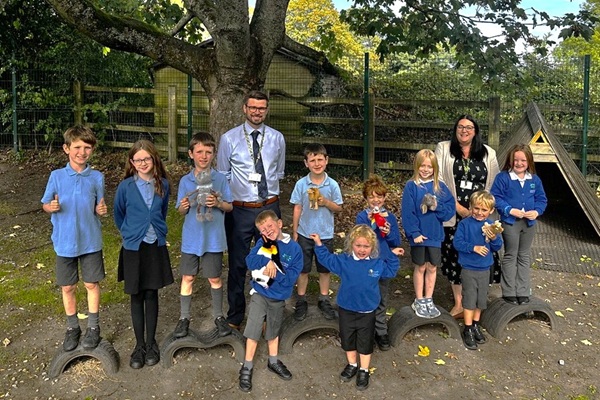
A VILLAGE school with fewer than 70 children on its roll has had its first inspection for nearly eight years.
Ofsted visited Tortworth Primary School, in Charfield Road, in July, and published its report at the start of the new school term.
The regulator said the school met its expected standards for curriculum and teaching, inclusion, leadership and governance, and personal development and well-being.
Pupil achievement, attendance and behaviour, and Early Years provision all ‘need attention’, Ofsted said.
The school, which has 69 pupils on its roll and a capacity of 105, became an academy in 2023 as part of Castle School Education Trust, which is now known as Pathway Trust. It was last inspected in 2018, when it was still a church voluntary controlled school.
Head teacher Michelle Engley joined the school in September last year, and there have been a significant number of staff changes since she took over, including in senior leadership roles.
The inspectors said: “New leaders have prioritised improving the quality of curriculum and teaching.”
They said the school, with the support of the trust, has revised its curriculum so that it is “more ambitious for pupils” and leaders are making sure pupils have the foundational skills they need as a priority.
The report also said leaders have an accurate understanding of the school’s strengths and priority areas for improvement, adding: “The actions that leaders are taking are beginning to make a difference.”
The report said: “Pupils at Tortworth Primary School enjoy school.
“Staff identify pupils’ barriers to learning and well-being and provide help to overcome these.
“Leaders have recently introduced a new curriculum and raised expectations for what pupils should know.
“However, their previous inconsistent classroom experiences have resulted in gaps in pupils’ knowledge and understanding.”
The inspectors said pupils are “proud of their school”, and relish the recently-introduced student leadership roles that give them responsibility.
But the report also said the youngest children in the school’s Early Years provision are not as well prepared for their next stage of education as they should be.
The inspectors said: “Pupils learn to read confidently and accurately.
“However, the quality of their written work and their mathematical understanding are not of the same standard.”
Attendance and behaviour was another area that ‘needs attention’, according to the report, but it acknowledged that work on this had already begun.
The inspectors said: “Leaders are clear that too many pupils are persistently absent from school. This is impacting on how well they achieve.
“Leaders have raised expectations for attendance and communicated these clearly with pupils and their families. Leaders have put in place systems to track and monitor pupils’ attendance.
“The early impact of this work is positive with overall attendance starting to rise.”
Mrs Engley said: “We are so pleased that all the hard work from the team has been recognised, especially the accelerated progress which has taken place across the last 12 months.
“The report reflects our own school self-evaluation, and work is already in progress for the areas identified as needs attention.
“Our early years team has experienced significant staff turnover over the last three years, and this has impacted on the consistency of provision.
“The report recognises that leaders are clear about the changes needed to improve the quality of education with this phase and have begun to act, however this work is recent.”
She said the report’s observation that children are happy and staff build positive relationships is “fundamental to our work as a school”.
Mrs Engley added: “We feel confident that the work that has started in this area will go from strength to strength across this year, and the results will be visible in the outcomes achieved by our pupils.”